> For the complete documentation index, see [llms.txt](https://docs.slerf.tools/llms.txt). Markdown versions of documentation pages are available by appending `.md` to page URLs; this page is available as [Markdown](https://docs.slerf.tools/en/liquidity-management/liquidity-creator-solana.md).
# Solana Liquidity Pool Creation Guide
{% hint style="success" %}
Easily create a liquidity pool for any Solana token. Your token will be tradable on platforms like Raydium, Birdeye, and DexScreener.
{% endhint %}
#### How to Use the Solana Liquidity Pool Creation Tool (Raydium V2):
1. **Connect Wallet**
2. **Select the Trading Pair** for which you want to create the liquidity pool
3. **Retrieve the OpenBook Market ID** for the selected trading pair
4. **Enter the Amount of Tokens** to add to the liquidity pool
5. **Set the Liquidity Pool Open Trading Time** (optional)
6. **Submit to the Blockchain** to complete the liquidity pool creation
#### Preparation:
* A computer or a mobile phone
* Solana wallet (Phantom Wallet installation tutorial)
* At least 0.5 SOL in your wallet (Raydium will charge 0.4 SOL)
* Tokens for creating the liquidity pool and the [OpenBook Market ID](https://slerf.tools/en-us/openbook-market/solana)
#### Specific Steps:
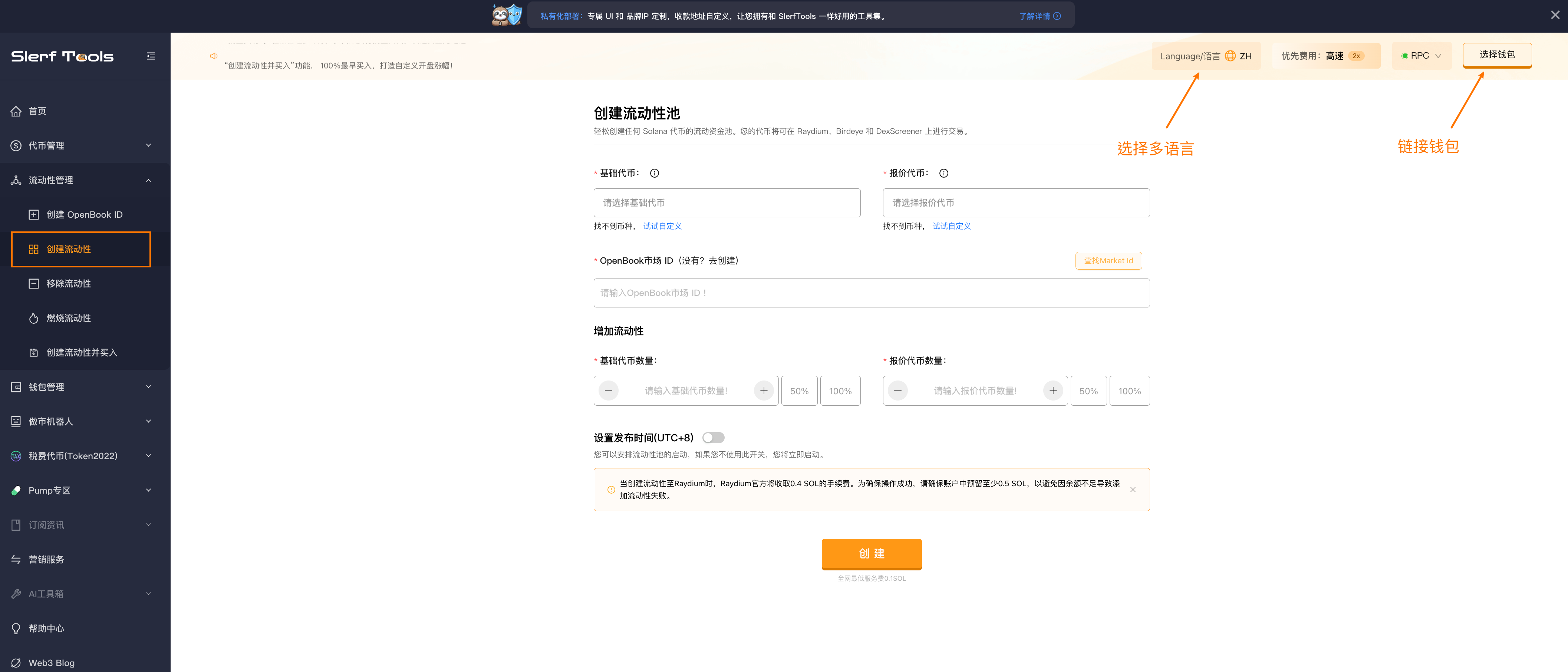
1. **Connect Wallet**
SlerfTools currently supports various popular Solana wallets, such as Solflare, Phantom, OK Wallet, etc. This guide uses Phantom Wallet as an example.
**Create Liquidity Pool**: [Create Liquidity Pool on SlerfTools](https://slerf.tools/en-us/liquidity-creator/solana)
Go to the SlerfTools liquidity pool creation page, where you can switch the language in the top right corner.
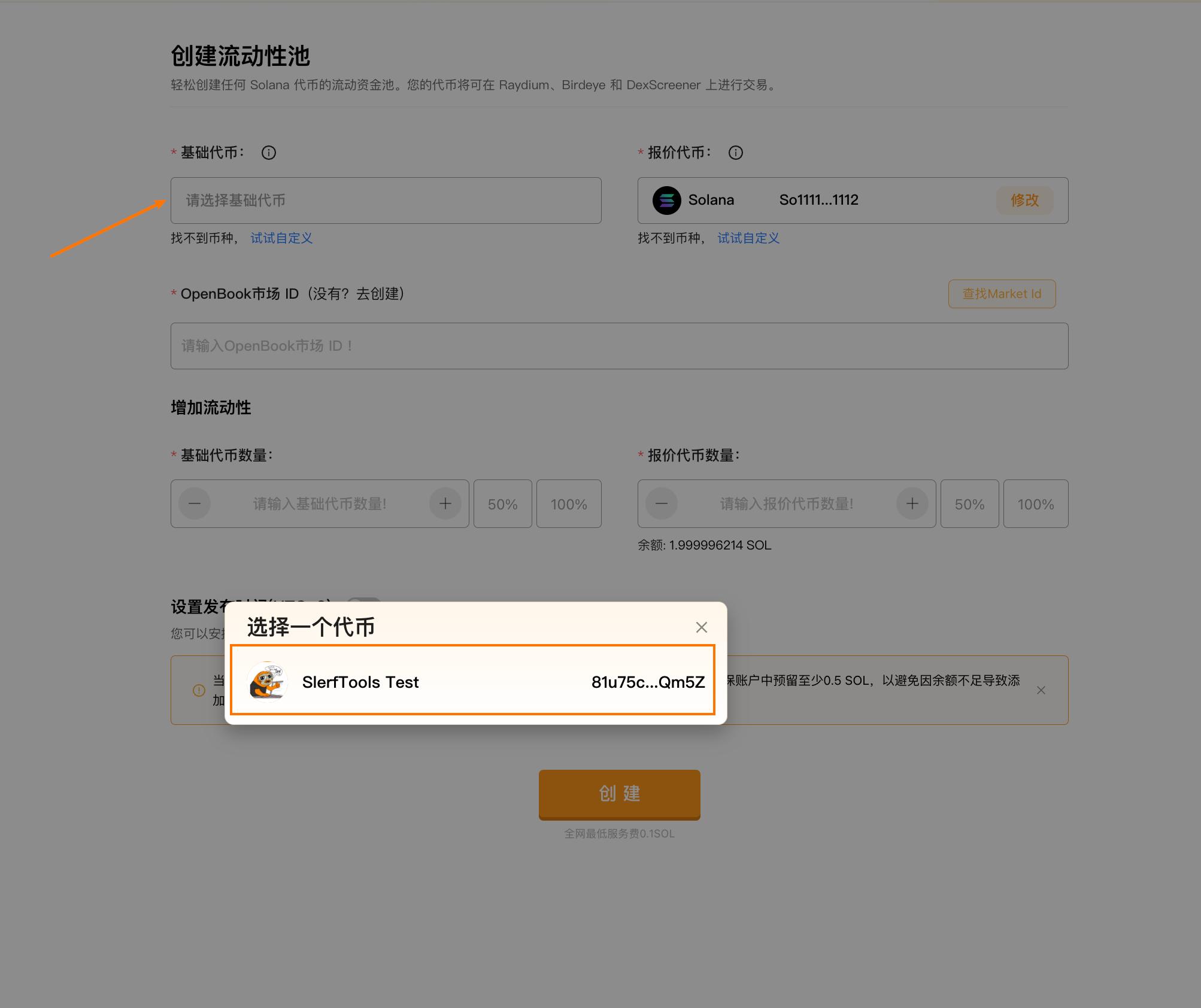
2. **Select the Trading Pair for which you want to create the liquidity pool:**
* **Base Token**: Choose your token that currently has no value.
* **Quote Token**: A token with market value, typically SOL or USDC.
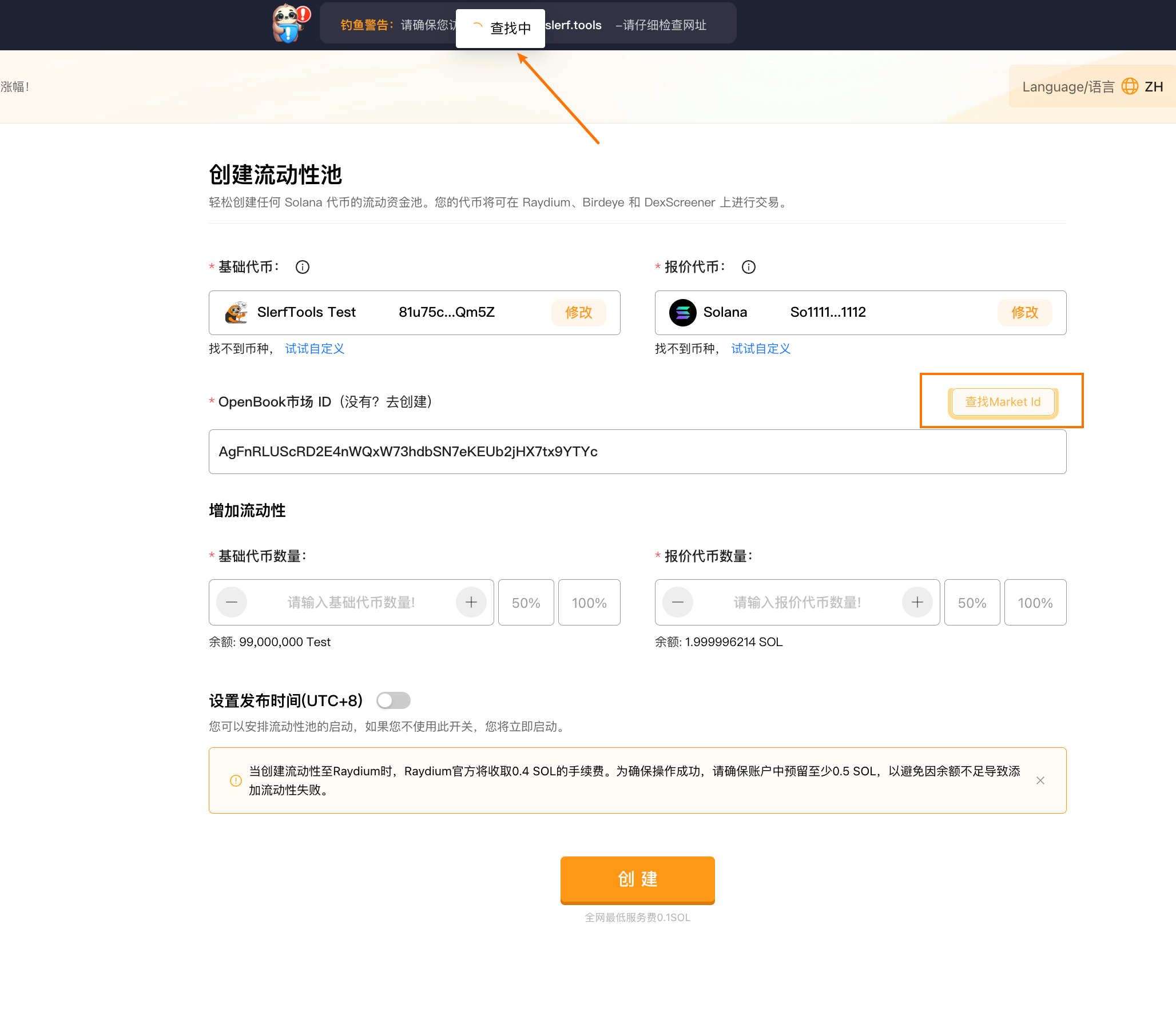
3. **Retrieve the OpenBook Market ID for the selected trading pair.**
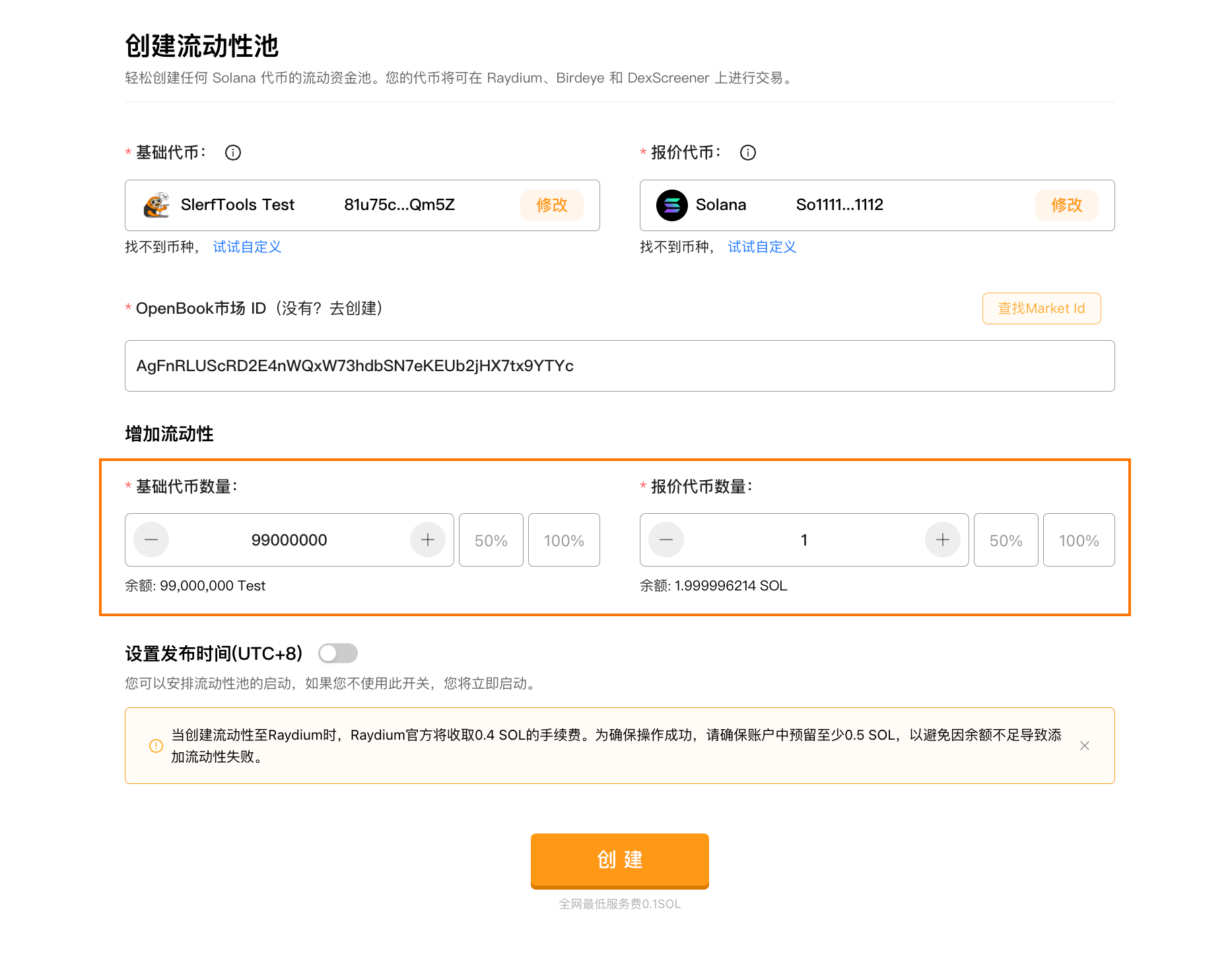
4. Enter the amount of tokens to add to the liquidity pool.
{% hint style="warning" %}
When creating liquidity on Raydium V2, Raydium will charge a fee of 0.4 SOL. To ensure the operation is successful, please make sure to have at least 0.5 SOL in your account to avoid liquidity addition failure due to insufficient balance.
{% endhint %}
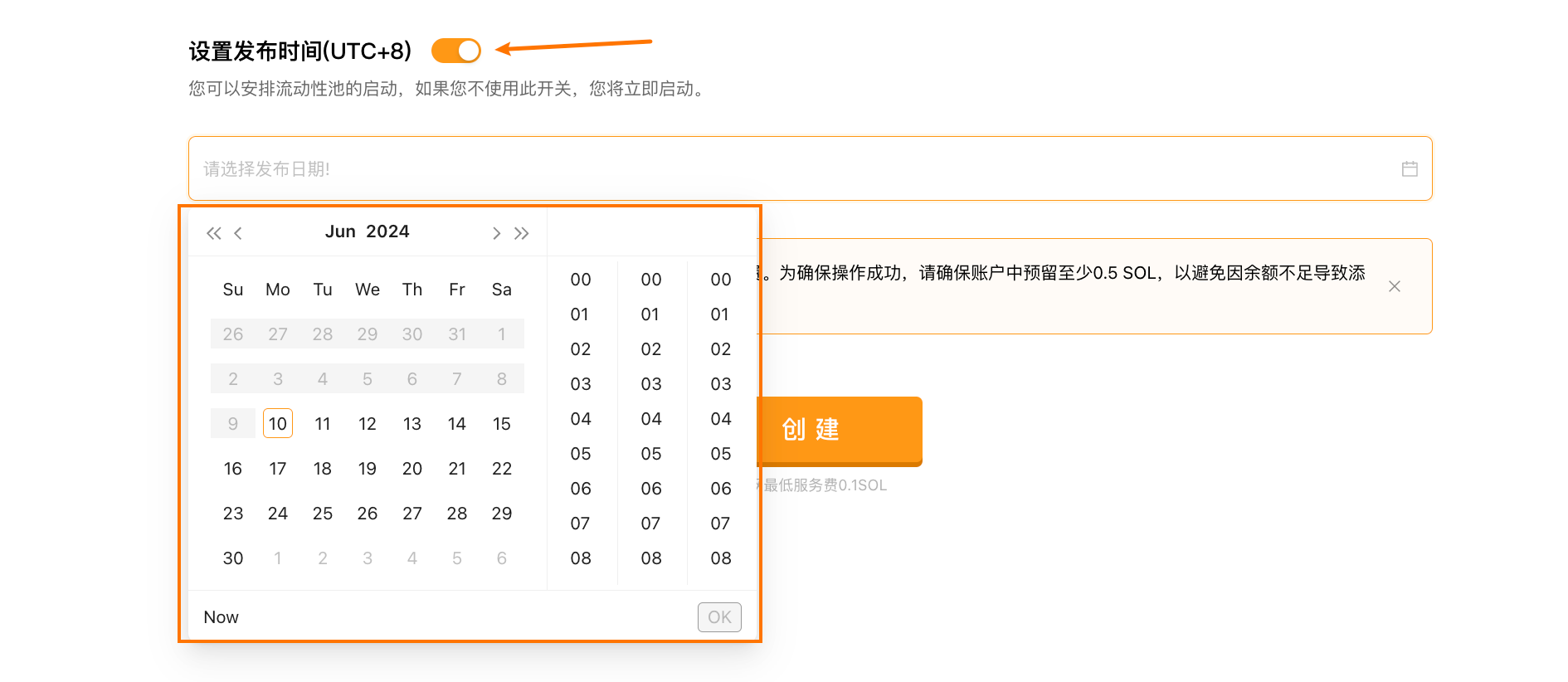
5. **Set the Liquidity Pool Open Trading Time (optional)**
If you need to schedule the opening of trading, you will use this configuration. After enabling "Set Release Time," you can set the time, with the time zone being UTC+8.
6. Submit to the blockchain to complete the liquidity pool creation.
Once created, it will be displayed and available for trading on Raydium's official platform or third-party market software.
[Remove Liquidity](https://slerf.tools/en-us/liquidity-remover/solana) [Burn Liquidity](https://slerf.tools/en-us/liquidity-burner/solana) [Batch Trading Market Making](https://slerf.tools/en-us/multi-swap/solana)
---
# Agent Instructions
This documentation is published with GitBook. GitBook is the documentation platform designed so that both humans and AI agents can read, navigate, and reason over technical content effectively. Learn more at gitbook.com.
## Querying This Documentation
If you need additional information that is not directly available in this page, you can query the documentation by asking a question.
Perform an HTTP GET request on the following URL with the `ask` and `goal` query parameters:
```
GET https://docs.slerf.tools/en/liquidity-management/liquidity-creator-solana.md?ask=&goal=
```
`ask` is the immediate question: it should be specific, self-contained, and written in natural language.
`goal` is what the user is ultimately trying to achieve, the reason they need the answer. Sharing it helps GitBook give you a better, more relevant answer. A goal is most helpful when it describes the outcome the user wants rather than restating the question. For example, with `ask=how do I create an API token`, a goal like `automate deployments from our CI pipeline` lets GitBook tailor the answer to that use case.
The response will contain a direct answer to the question and relevant excerpts and sources from the documentation.
Use this mechanism when the answer is not explicitly present in the current page, you need clarification or additional context, or you want to retrieve related documentation sections.